Can someone please explain the difference between a /2, /5, /6, /7 (is there a /8?), and what exactly is an “oil-head” and a “k” bike? And what are these Earle forks that everyone speaks so reverently about?
OK, this is off the top of my head, so it may contain some errors.
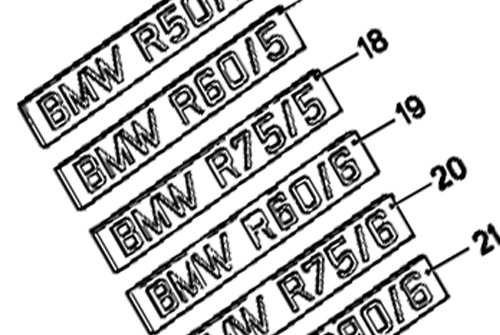
2 = second version of some of the Earles fork bikes. The designation is often used incorrectly for all Earles fork twins. Not all were designated /2. Updated normal 500cc bikes beginning ca. 1960 were designated /2. The Earles fork is a swinging arm design, superior for sidecar rigs and off road applications, very plush riding, but a little heavy steering as a solo setup. They do not nosedive under braking, in fact they tend to rise in the front as the bike comes to a stop under heavy braking. These machines have very stout frames with sidecar bosses built in. The fork has adjustable geometry to accomodate the sidehack. The bikes were produced from 1955 – 1969. They came in normal and high performance versions of the horizontally opposed twin displacing either 500 or 600 cc. R50 and R60 designated normal performance. R50S, R69 and R69S are high performance models, the R69S making 42 HP and exceeding 110 mph. Despite the nomenclature, R69 models still displaced 600 cc, go figure…. 1969 models were shipped with either the Earles or a telescopic fork the same fork as the /5 series built from 1970-73. They were designated “US”. So an R69 US was a high perfomance 600 cc with a telescopic fork. There is also a 250 cc bike, this was a vertical single cylinder engine, uncommon in the US due to its lack of performance.
The 1970 /5 was a completely new motorcycle, the heavy frame with sidecar bosses was gone, the engines were redesigned with a plain bearing crank and the camshaft was carried below the crank instead of above it. This was the first electric start BMW. They retained the kick starter, however. This engine type was the basis for all air cooled twins through 1995. They were built in 500, 600 and 750 cc displacements. /6 designates all bikes built 1974 through 1976. They were again an updated, improved version of the /5 and had one or two disc brakes and added a 900 cc engine to the lineup. The flagship of the /6 series was the R90S, (though it did not carry the /6 designation) at the time it was one of the fastest mass produced machines available and is one of the most desirable bikes for BMW collectors. It was the first BMW “superbike.” It had a high performance 900 cc engine with DellOrto carburetors, dual disc ATE brakes, and a cafe fairing. In 1977 the bikes again went through a remake, were equipped with either 600, 750, (later that year replaced by an 800) or 1000 cc engines. The flagship of this series was the R100RS, again with a tweaked engine, and a full sport-touring fairing and is still one of the most attractive bikes ever made. It is also highly collectible. The /7 designation was dropped in 1979 or 80 though many refer to all 77-84 bikes as /7s. Confused???
In addition, there was a smaller framed bike with either 450 or 650 cc horizontal twin engine produced from ca.1979 for a few years. This was quite a different animal though it shared some /7 assemblies. They were designated R45 and R65.
An “Oilhead” is also an opposed twin cylinder bike, but it has been totally redesigned. It is a cam-in-head 8 valve engine. It makes use of a duplex oil pump so it can pass a high volume of low pressure cooling oil through galleries around the exhaust valves, ala Suzuki GSX-R technology. There are 850, 1100 and now with the cruiser, 1200 cc versions. All have an oil cooler, two on some models. They have fuel injection, Motronic engine control,and ABS. Released in Europe in 1993, they have been delivered here since 1994. They use the engine as a stressed member, and it is basically a frameless design, with telelever front and, except for the cruiser, paralever rear suspension. The pivot points on both front and rear suspension systems are at the engine or gearbox.
I ride an R1100RSA and I love it.
A “K” bike is a water cooled, inline engine machine sharing almost no parts with the aircooled ones. The engine is oriented with the crankshaft running front to rear like the opposed twin, the engine is “lying on its side,” cylinder head on the left of the machine. It was built from 1985 to the present. It was the first production motorcycle to be equipped with ABS. The first version was a fuel injected, 1000 cc 4 cylinder 2 valves per cylinder, twin OHC, designated K100, followed by a 750 cc 3 cylinder version, the K75. Later, the displacement was increased to 1100 cc, and it became a 16 valve engine, and shortly after, the K75 was dropped. The latest version has a 1200 cc engine and an entirely new frame and suspension including a “telelever” front end.
There is now also an “F 650” series, a single cylinder 650 cc machine using a Rotax engine built to BMW specs and a chain final drive. This machine is assembled in Italy. Purists say it’s not a real BMW. Time will tell….
I’m sure that now you are utterly confused…. sorry
If any Presidents notice errors in what I have written, I’m truly sorry….feel free to correct them.